
Dual global shutter
Both image sensors expose the scene without rolling-shutter line scan, supporting cleaner geometry during hand, head, and body motion.
EGO R8 · USB stereo egocentric camera
R8 combines synchronized dual-camera capture, a configurable 6-axis IMU, unified hardware timestamps, factory calibration support, and USB 2.0 connectivity for robot learning, embodied AI, and VIO/SLAM development.
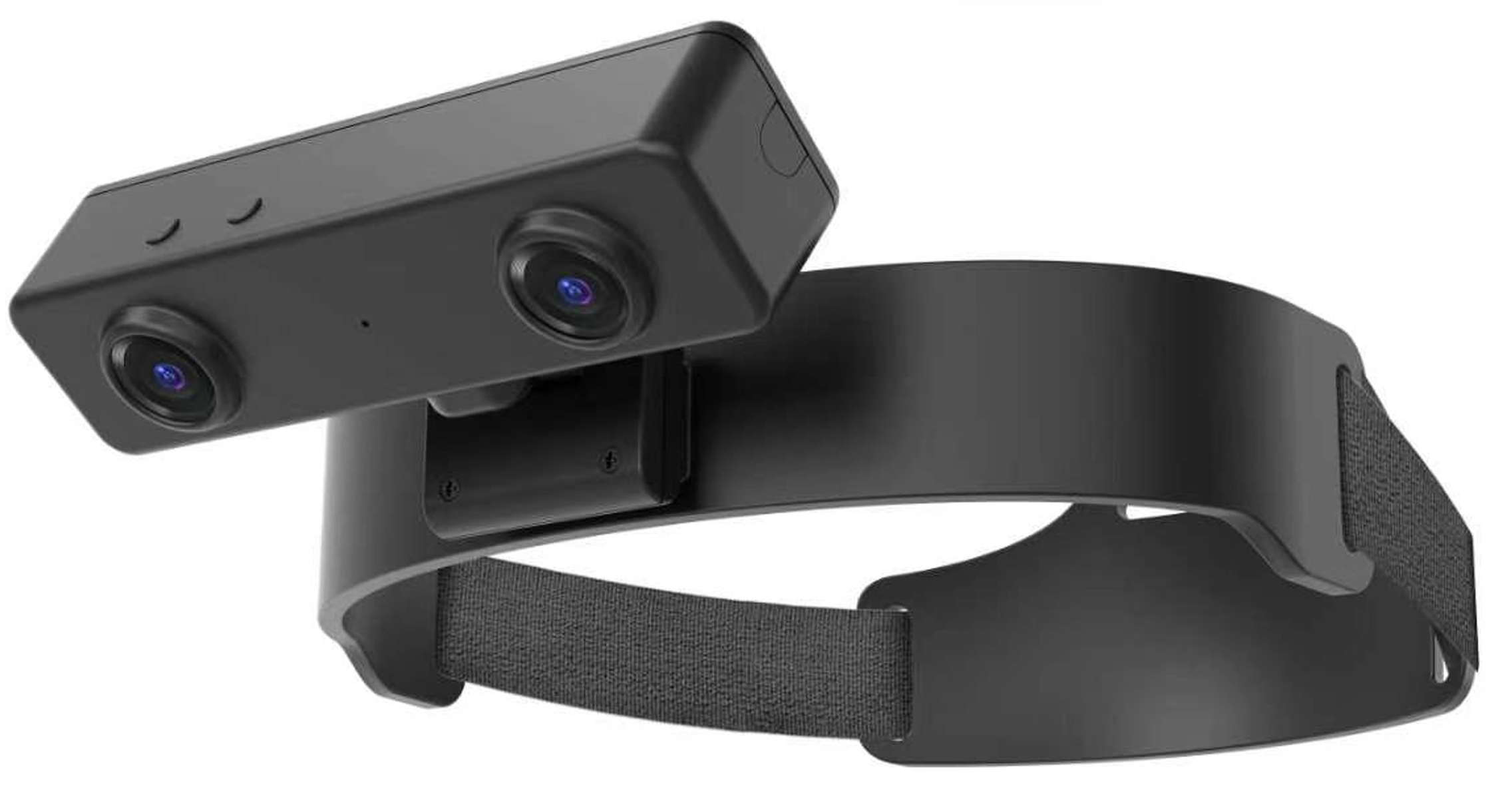
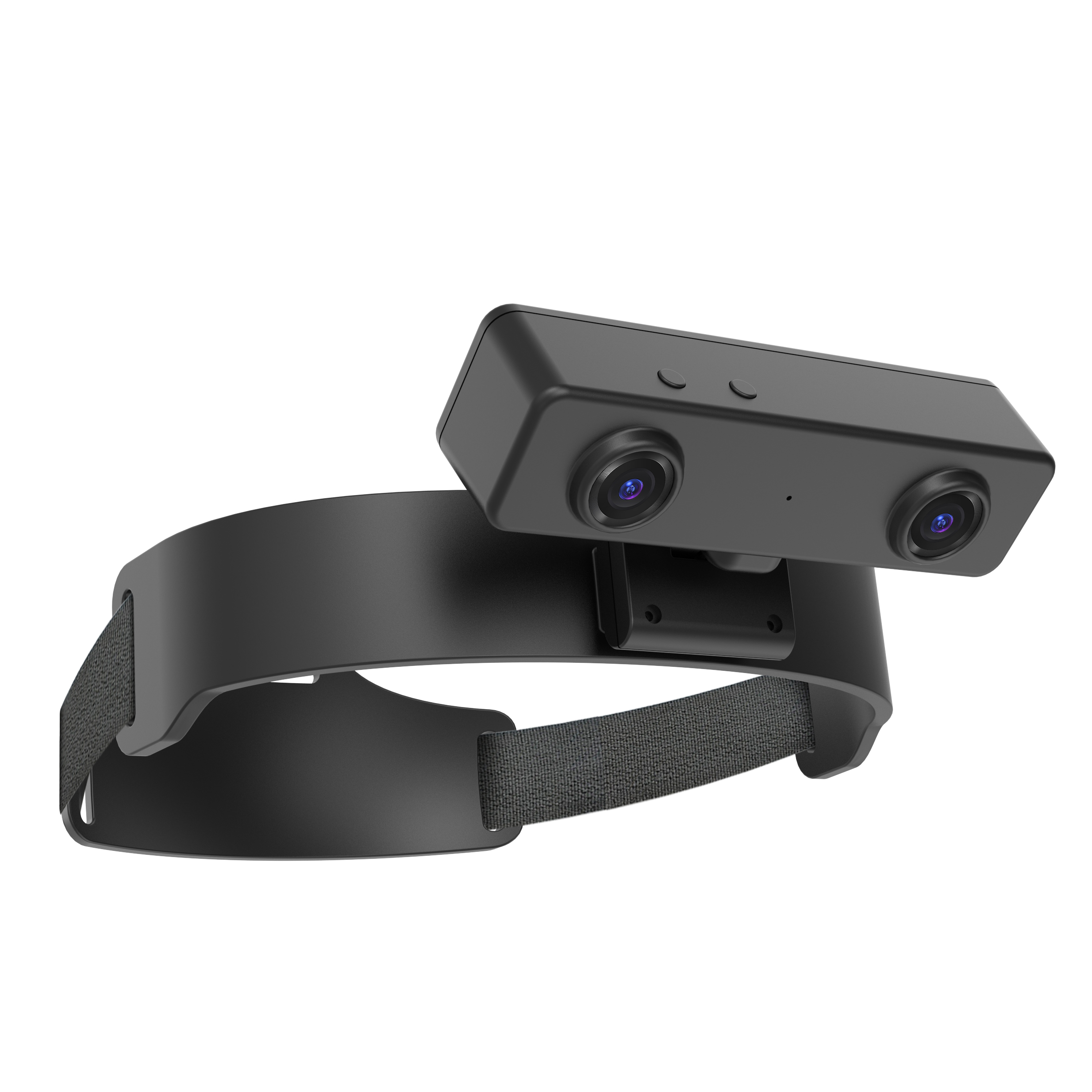
R8 product render supplied in the 2026 manufacturer specification document. Final hardware, cable, calibration, and firmware configuration must be confirmed.
R8 capture architecture
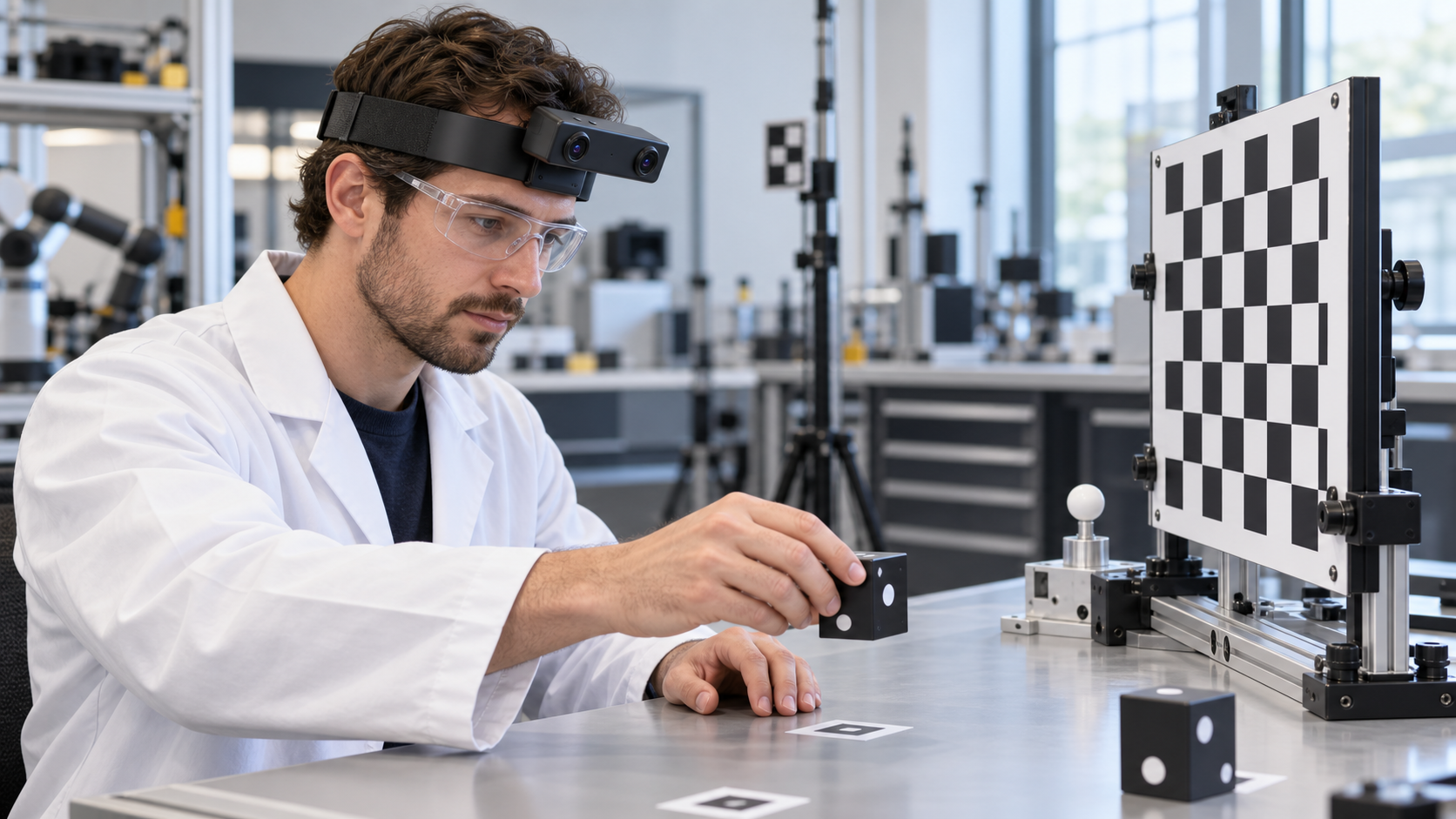
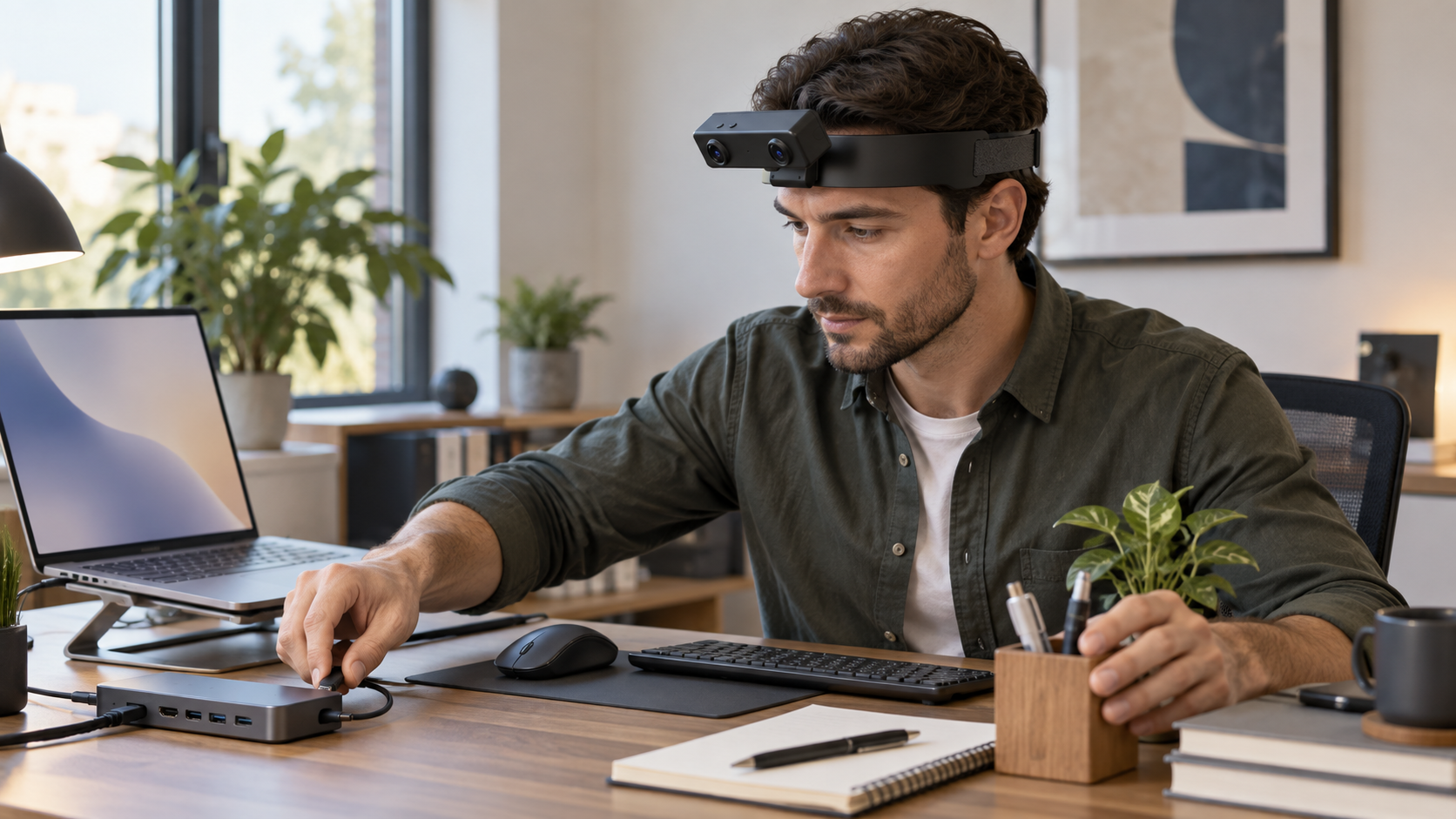
The supplied document positions R8 as a head-mounted capture platform for human demonstrations, embodied-AI datasets, and VIO/SLAM front-end development. R8 provides the capture layer; depth, localization, annotation, and model training remain part of the connected software pipeline.

Both image sensors expose the scene without rolling-shutter line scan, supporting cleaner geometry during hand, head, and body motion.
The document specifies a common hardware trigger or shutter signal for dual-camera synchronization.
Listed sampling choices are 100, 200, and 500 Hz, with unified timestamps for camera and inertial samples.
The document describes unit-specific intrinsics, distortion coefficients, stereo extrinsics where applicable, and SDK/API delivery.
R8 product views
These supplied product renders show the dual-camera enclosure, adjustable mounting position, headband structure, and rear fit from complementary viewpoints.
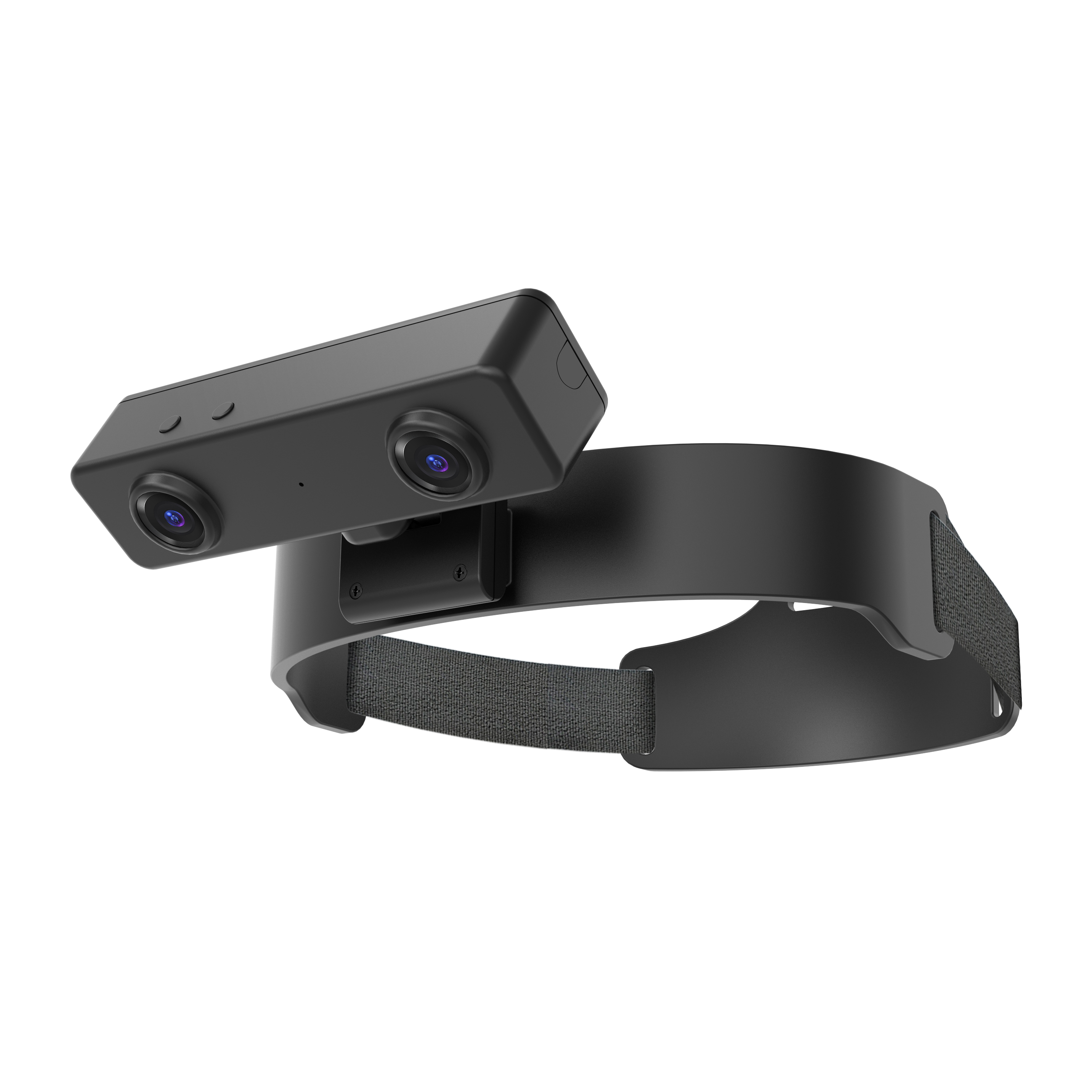
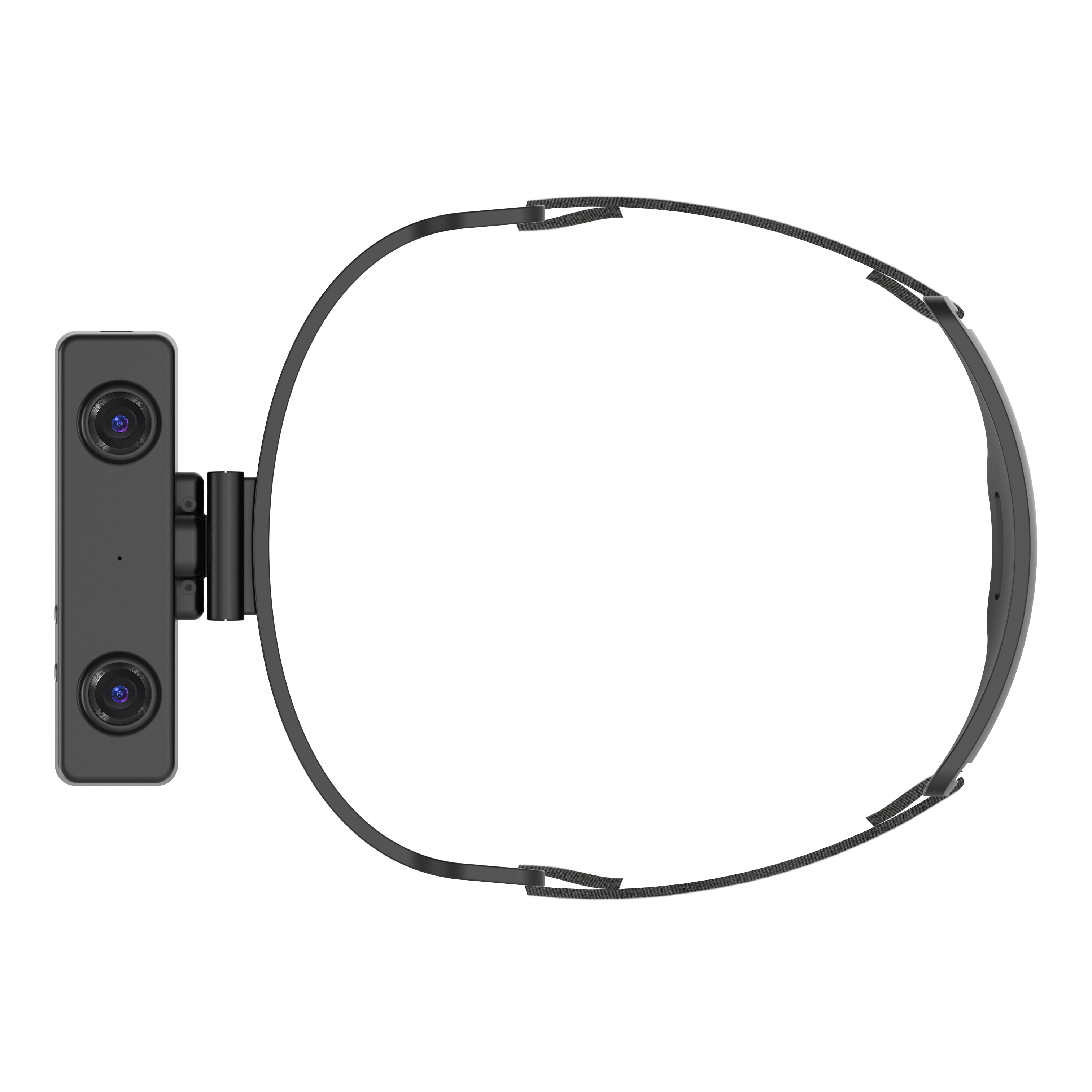
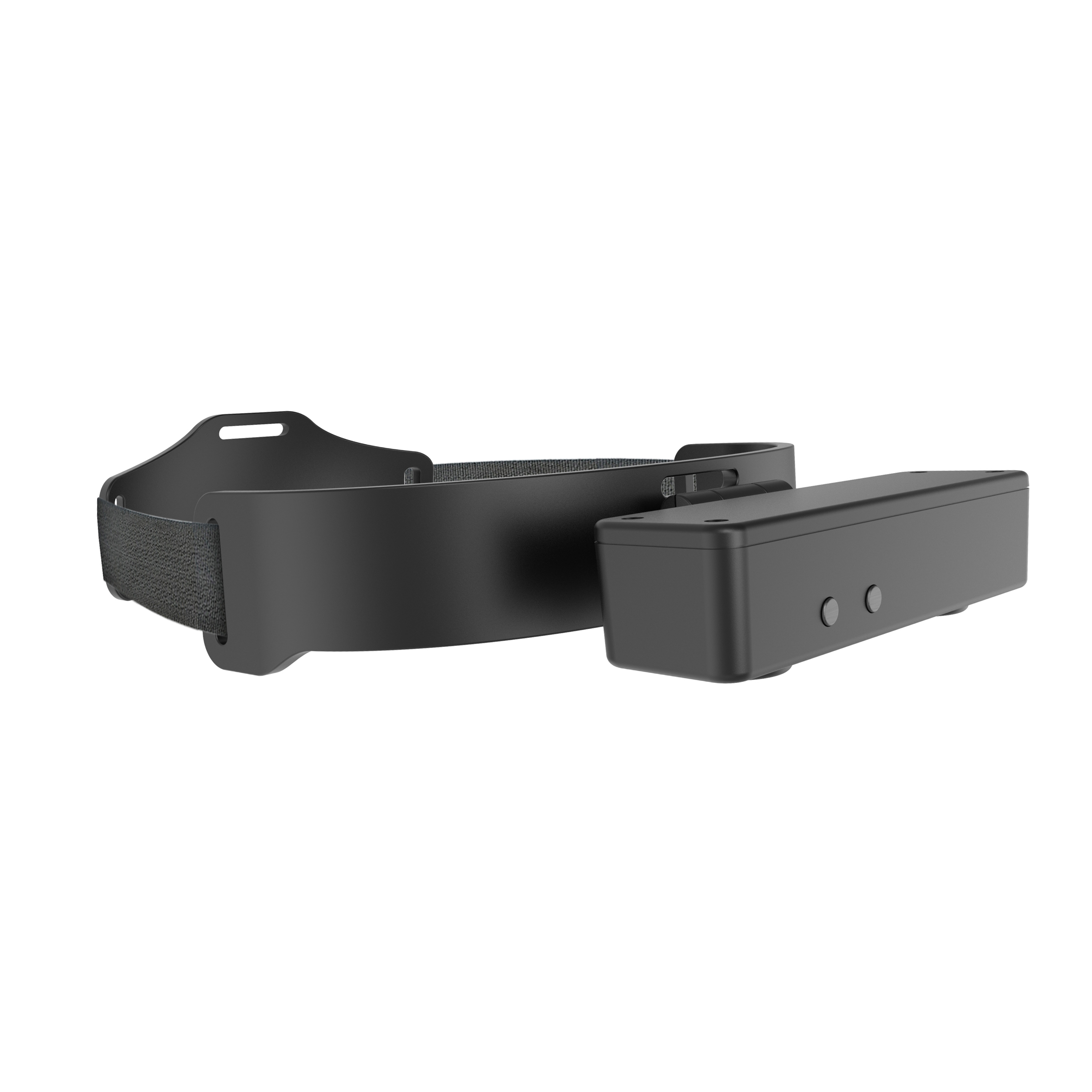
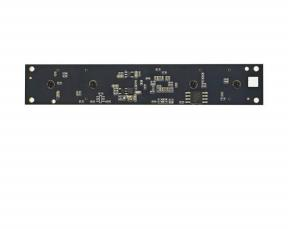
R8 stereo module
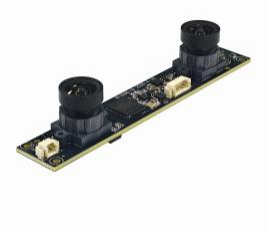
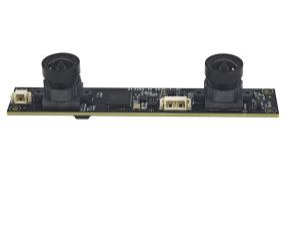
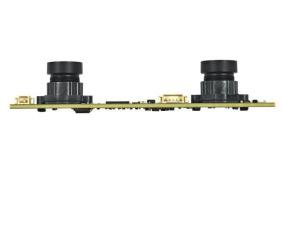
The module uses M12 × 0.5 lens mounts and the SC235HGS sensor family named in the source document. Multiple views below come directly from the uploaded specification.
R8 specification table
The document contains configuration-dependent statements and a few internal differences. Those points are identified below so the final hardware and firmware can be confirmed before ordering.
| Group | Parameter | R8 document value |
|---|---|---|
| Imaging | Camera arrangement | Dual-lens stereo, dual global-shutter sensors |
| Resolution in main table | 1600 × 1200 at 30 FPS | |
| USB maximum listed mode | MJPG 1920 × 1080 at 30 FPS; YUY2 1920 × 1080 at 15 FPS | |
| Sensor / pixel size | 1/2.6 inch / 3.0 μm × 3.0 μm | |
| Dynamic range | Linear: 61.56 dB; HDR: 91.56 dB | |
| Field of view | Diagonal 180° / horizontal 115° / vertical 80° | |
| Focus and mount | Fixed focus; M12 × 0.5 lens mount; lens TTL 15.15 ± 0.3 mm | |
| Automatic controls | Saturation, contrast, acutance, white balance, and exposure | |
| Synchronization & data | Camera synchronization | Common hardware trigger or shutter signal |
| IMU | Built-in 6-axis IMU in head and wrist units where required | |
| IMU sampling | 100 / 200 / 500 Hz | |
| Timestamp | Unified timestamp for camera frames and IMU samples | |
| Calibration and software | Intrinsics, distortion coefficients, and extrinsics where applicable; SDK/API to be provided | |
| Electrical & environment | Interface | USB 2.0 |
| Supply / current | DC 5 V / maximum 320 mA | |
| Working temperature | 0°C to +60°C | |
| Storage temperature | −20°C to +70°C | |
| Operating-system compatibility | Windows, Android, macOS, Linux, or Raspberry Pi listed | |
| Document-listed PCB size | 100 × 94 × 60 mm; confirm the applicable module or housing configuration |
Configuration note: the main table lists H.264/H.265 output, while the USB mode table lists MJPG and YUY2. The narrative also describes nanosecond-level hardware timestamp alignment. Confirm available codecs, timestamp units, measured synchronization tolerance, delivered calibration files, and SDK support on the final sample.
USB 2.0 video modes
These combinations are reproduced from the uploaded mode table. Confirm whether both cameras stream simultaneously in the selected mode and how bandwidth is allocated.
| Format | Resolution | USB 2.0 frame rate |
|---|---|---|
| MJPG | 1920 × 1080 | 30 FPS |
| MJPG | 1280 × 720 | 30 FPS |
| MJPG | 640 × 480 | 30 FPS |
| YUY2 | 1920 × 1080 | 15 FPS |
| YUY2 | 1280 × 720 | 30 FPS |
| YUY2 | 640 × 480 | 30 FPS |
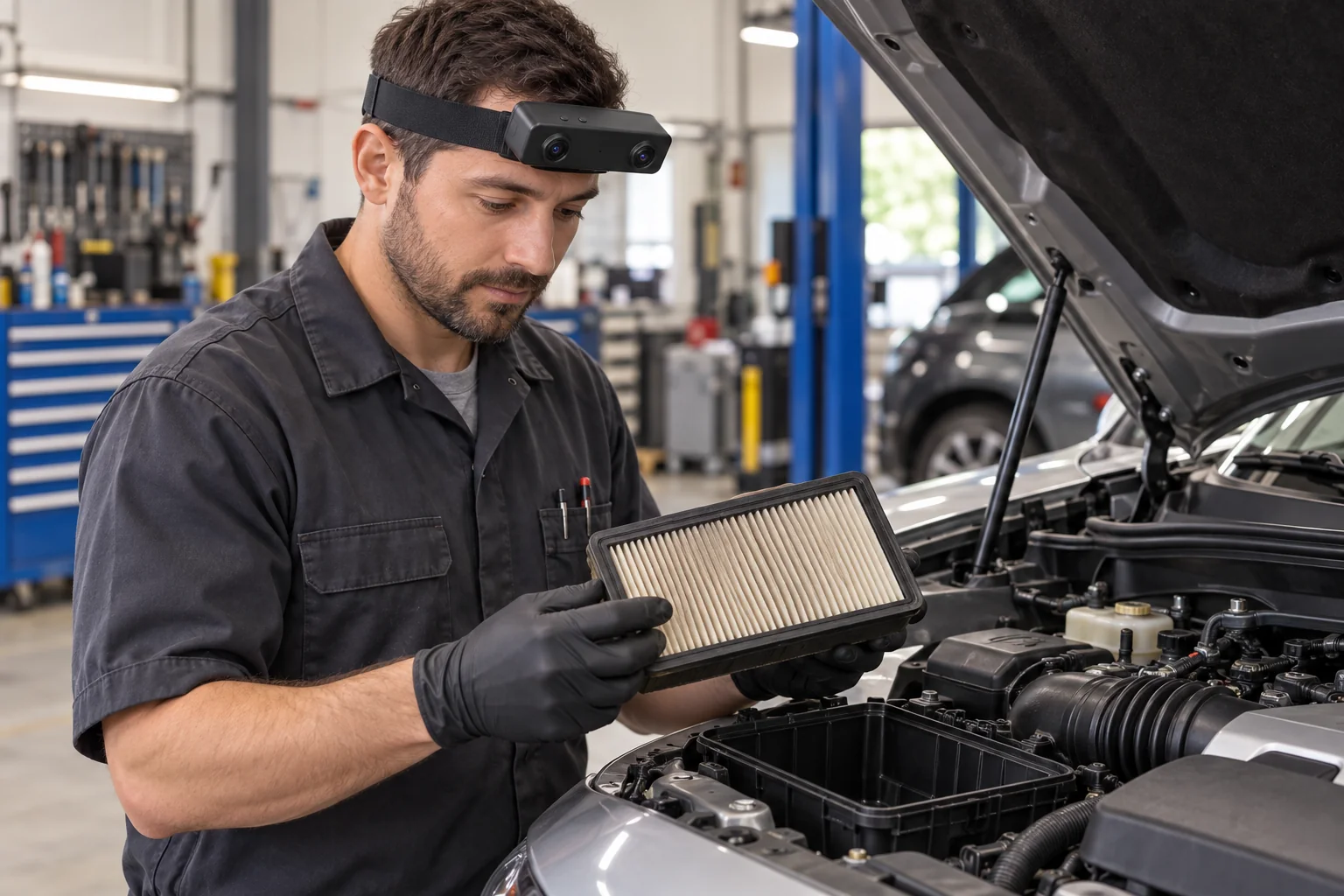
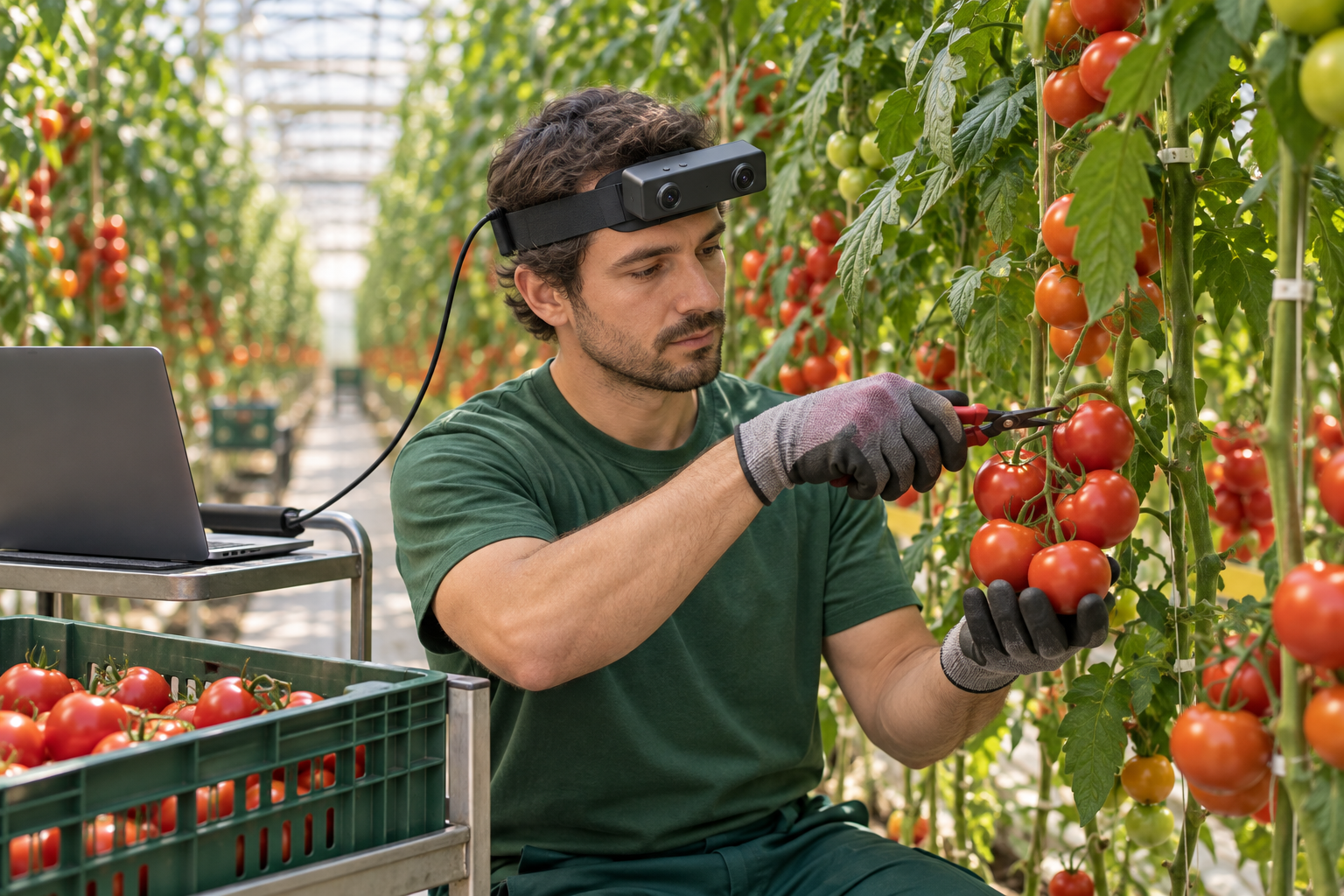
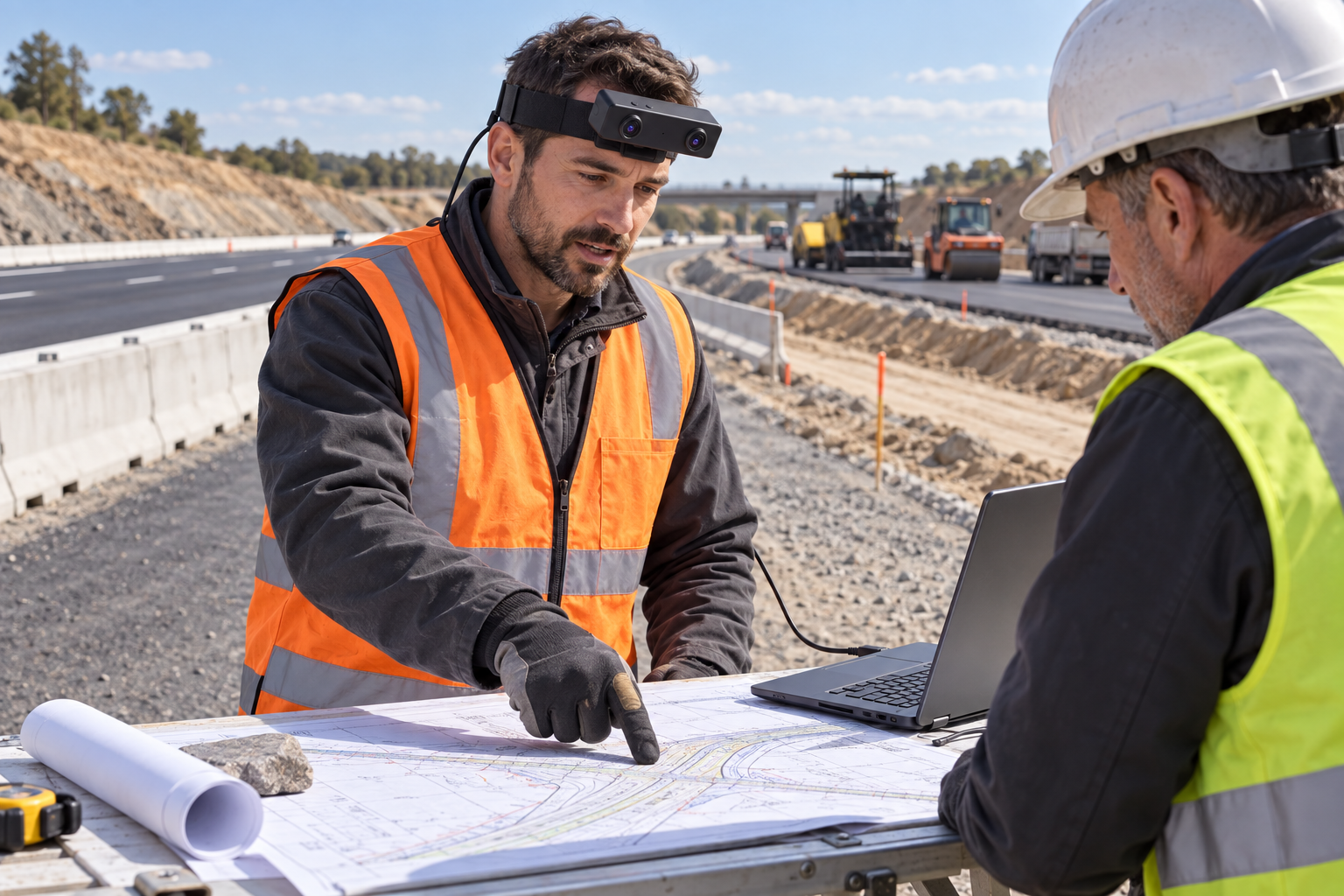
R8 application blogs
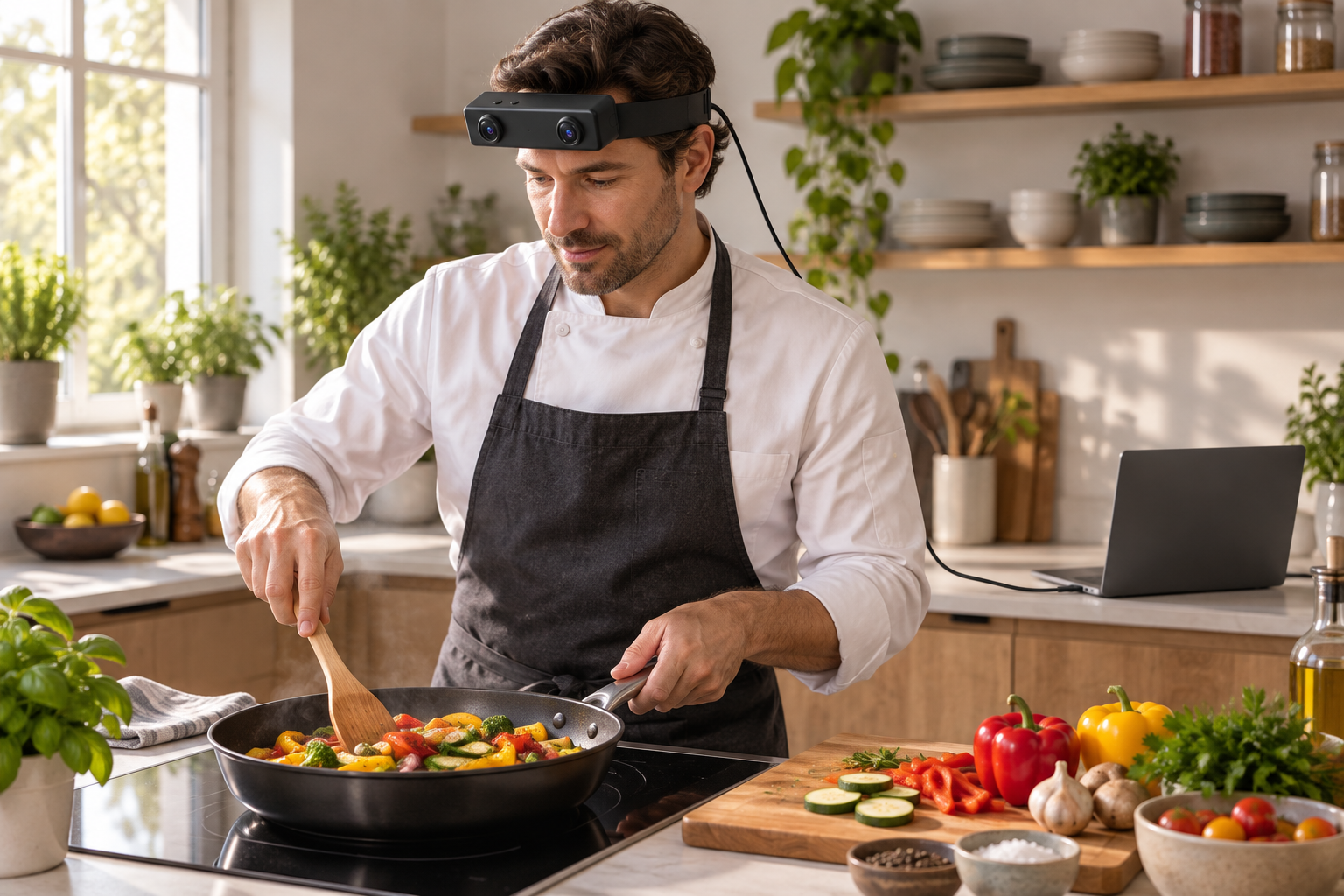
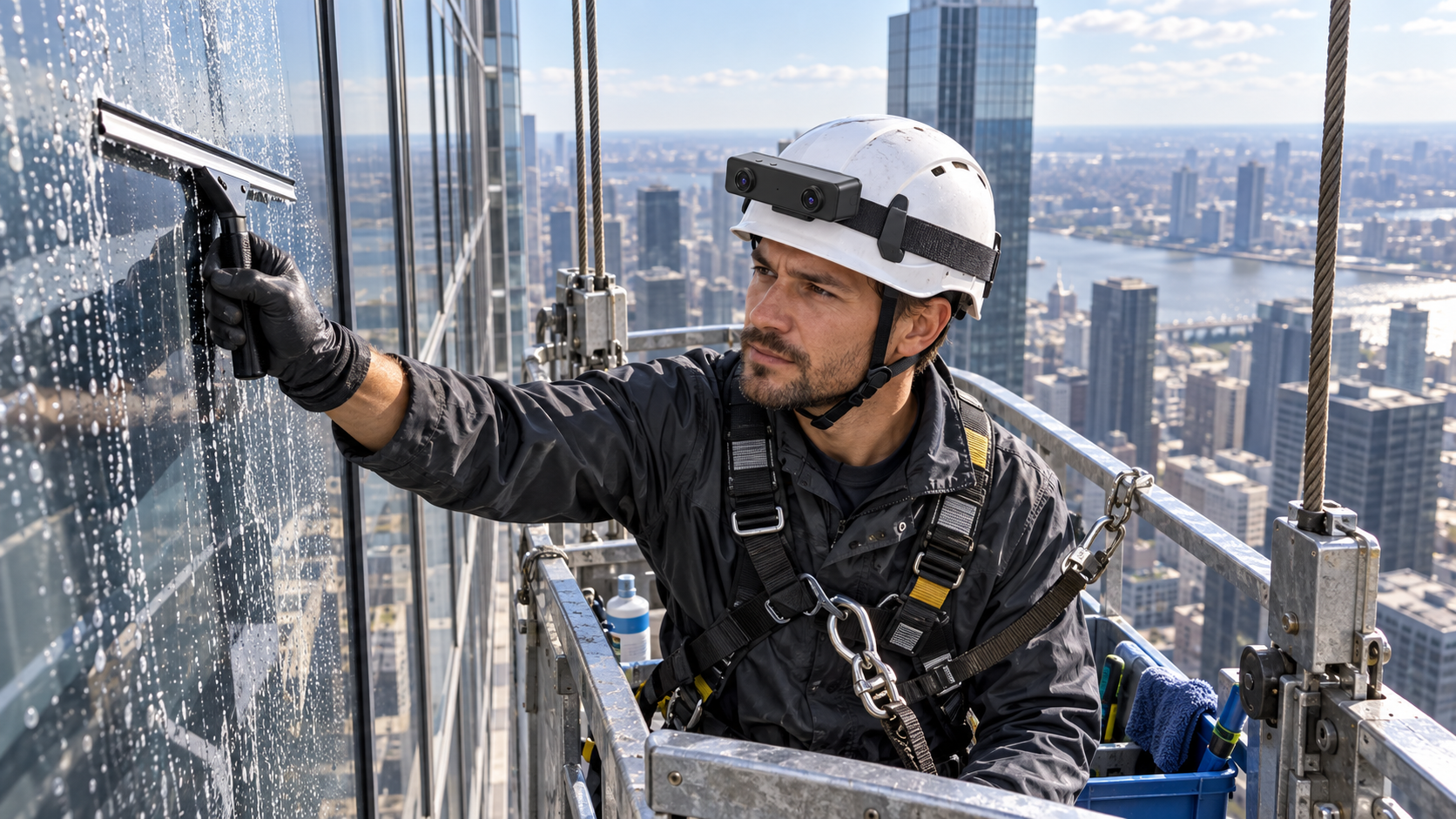

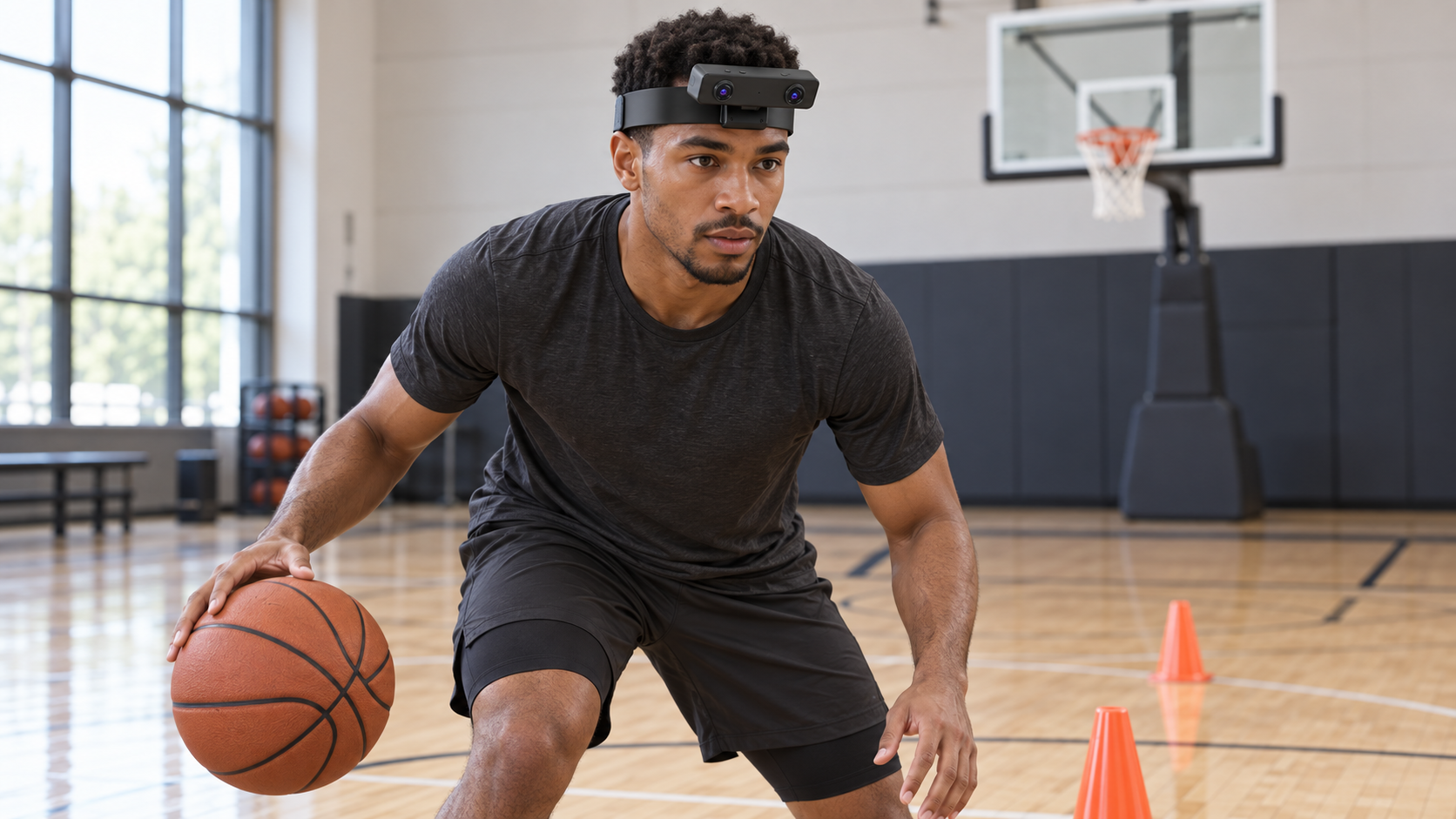
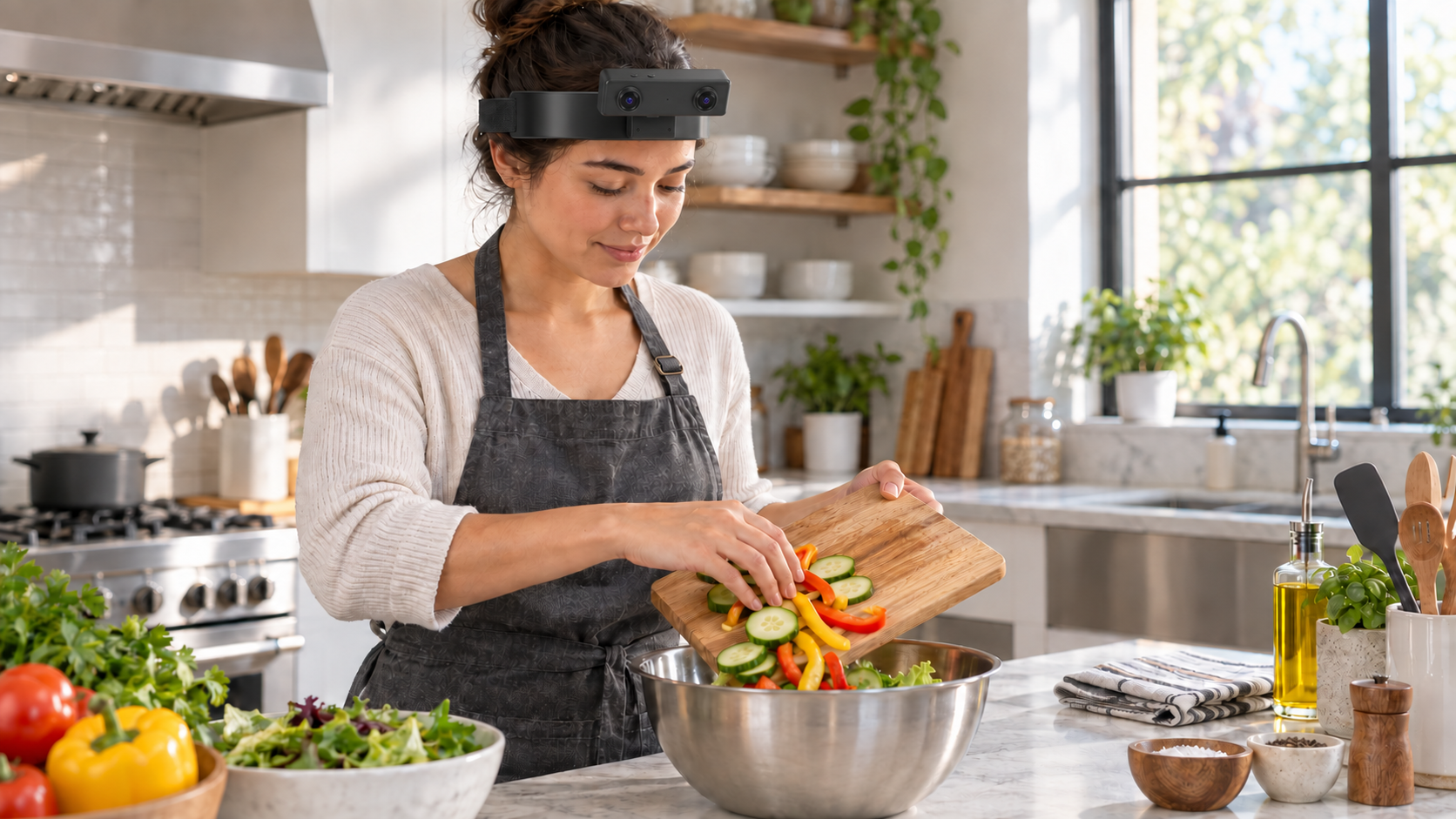

Documented reliability programme
The source document lists qualification tests for storage and operation temperature, humidity, thermal shock, drop, vibration, cable tensile load, ESD, power cycling, and USB connector cycling. These are test descriptions, not an IP rating or a guarantee for every use environment.
Storage at +60°C and −20°C for 96 hours; operation tests at +60°C and −20°C for 24 hours; humidity at 60°C and 80% for 24 hours.
60 cm packaged and unpackaged drop tests, 50 Hz vibration on X/Y/Z axes, and a 4 kg cable tensile load for 60 seconds.
2 kV contact ESD, 4 kV air ESD, 30-second on/off cycling for 24 hours, and 250 USB connector cycles.
The main specification table lists the working range as 0°C to +60°C even though the reliability section includes a −20°C operation test. Use 0°C to +60°C as the published working range until the supplier confirms otherwise.
R8 configuration check
Send the required resolution, codec, frame rate, dual-stream behavior, IMU rate, calibration deliverables, operating system, cable length, quantity, and delivery country.